My Child is Terrified of Their SATs ... And I Don't Know How to Help
How Oldham parents can support their Year 6 child through exam anxiety — and set them up to thrive
There's a particular kind of worry that settles over a household in the months leading up to May. You might notice it first in the small things — your child taking longer to fall asleep, becoming quieter at the dinner table, or suddenly bursting into tears over a practice paper that "didn't go well." If you're a parent of a Year 6 child in Oldham, you may know this feeling all too well.
SATs — the Key Stage 2 national curriculum tests taken by every child in their final year of primary school — are one of the most talked-about milestones in a child's early education. And while schools do their best to prepare pupils, the reality is that for many children, SATs feel like the biggest, most important thing that has ever happened to them. For parents watching this unfold, it can feel helpless and heartbreaking in equal measure.
You are not alone. And more importantly — there is a way through this.
The anxiety many children feel is not a sign that they are weak, or unprepared, or not clever enough. It is a sign that they care.
Why Are Children So Anxious About SATs?
It's worth understanding why SATs create such pressure before we can address it properly.
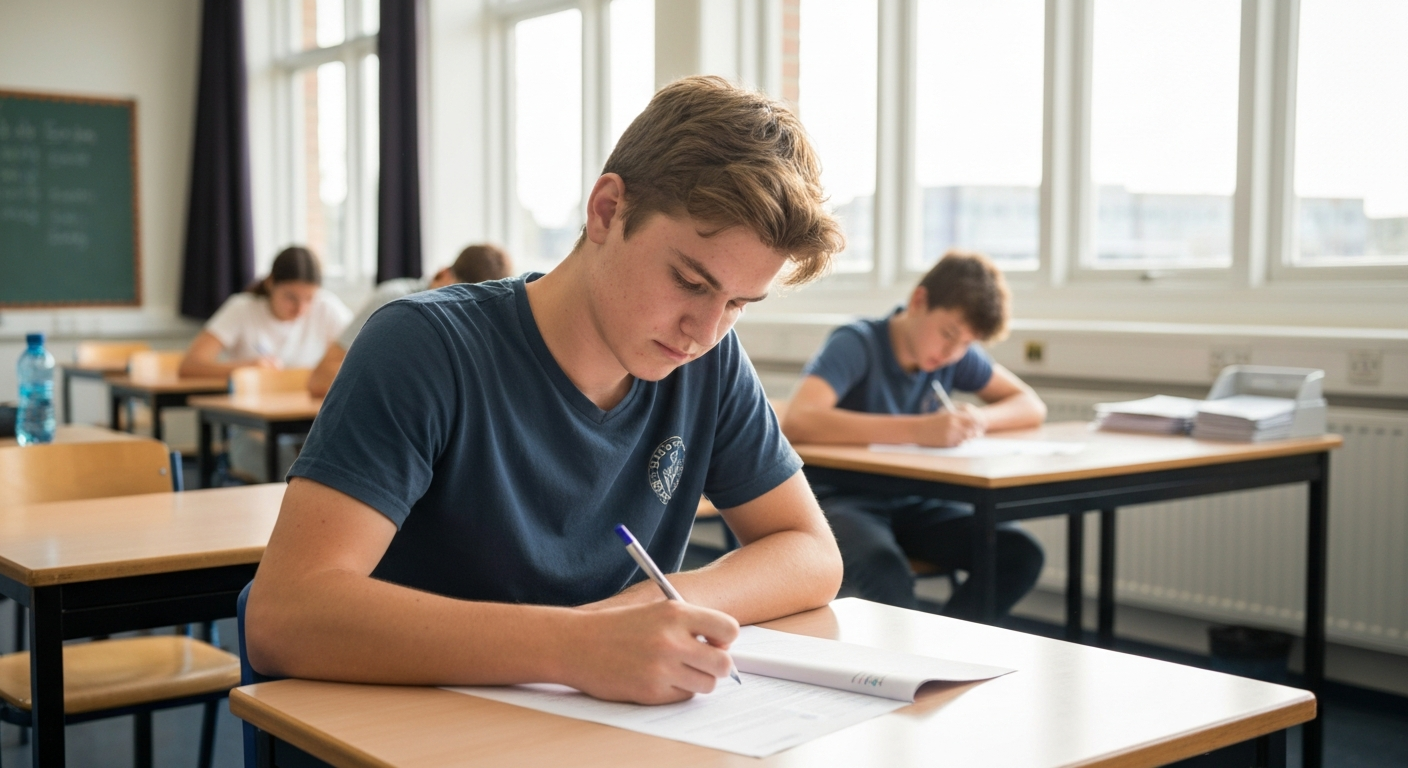
Year 6 SATs assess children's attainment in reading, maths, grammar, punctuation and spelling — the core subjects they've been building since Reception. The tests are designed to be challenging, and they are taken seriously by schools, teachers, and — increasingly — parents. Research and reports from mental health charities have consistently highlighted that at just 10 or 11 years old, many pupils experience significant stress and anxiety in the lead-up to these assessments, with symptoms including disturbed sleep, headaches, frequent crying, and in some cases, even panic attacks.
Part of the problem is the weight that children feel has been placed on these tests. They hear adults talk about SATs being important. They see their teachers switch almost entirely to English and Maths revision in the final months of Year 6. They notice when their classmates start going to tutors. They pick up on conversations — at home, in the playground, in the car — that suggest something significant is at stake.
And while it's true that SATs do matter, there's a crucial difference between helping a child understand the purpose of an exam and allowing that exam to consume their sense of self-worth.
What SATs Actually Measure — and What They Don't
One of the most powerful things you can do as a parent is help your child understand what SATs are actually for.
SATs results help secondary schools understand your child's academic starting point as they transition from primary to secondary school. They provide teachers in Year 7 with an objective snapshot of each pupil's strengths and the areas where they may need extra support. That's genuinely useful — both for your child's new school and for you as a parent.
What SATs do not do is determine your child's intelligence, their potential, or their worth as a person. They are not a final verdict. They are a checkpoint — one of many your child will pass through in their school career. A child who struggles in SATs can still thrive in GCSEs. A child who excels in SATs may face different challenges down the line. What matters far more than the result is how your child feels about themselves as a learner when they walk out of that exam hall.
Help your child understand this. Say it out loud. Repeat it. It matters more than any revision technique.
Practical Ways to Reduce SATs Anxiety at Home
So how do you actually help? Here are some evidence-backed, parent-tested strategies that make a real difference:
- Keep routines calm and consistent. Children thrive on predictability, especially when they're stressed. Make sure your child is getting enough sleep, eating well, and still has time for activities they enjoy. Protecting their downtime is not indulgence — it is essential for memory consolidation and emotional regulation.
- Talk about the exam without catastrophising it. Ask open questions: "How are you feeling about SATs?" rather than "Are you ready for SATs?" The first invites honest conversation. The second puts them on the spot. If they express fear or worry, validate it: "It makes sense that you feel nervous — it's a big thing. And I know you've been working hard."
- Don't compare your child to siblings, classmates, or cousins. Every child learns differently and progresses at a different rate. Comparison — even well-meaning comparison — can quietly erode confidence. Focus entirely on your child's own journey.
- Celebrate effort, not just outcomes. If your child completes a practice paper, praise the effort they put in — regardless of the score. A growth mindset — the belief that ability can improve with effort — has been shown to be one of the most powerful predictors of academic resilience.
- Get the right support in place early. One of the biggest sources of SATs anxiety is the feeling of being unprepared — of not knowing something and having no one to help explain it. This is where targeted, expert support can be genuinely transformational.
Why Targeted Tuition Changes Everything
There is a significant difference between a child who struggles through SATs preparation alone — feeling behind, confused, and increasingly anxious — and a child who has a trusted, knowledgeable adult guiding them through each topic, filling in the gaps, and building their confidence week by week.
At Oldham Tuition Centre, we don't believe in a one-size-fits-all approach to learning — because no two children are the same.
Every child who joins us begins with a thorough diagnostic assessment — a structured process designed to identify precisely where your child's gaps in knowledge lie, what their specific weaknesses are, and what foundation they already have to build on. This isn't a generic test. It is a careful, expert analysis of your child as an individual learner.
From that diagnostic, we build a personalised learning plan — unique to your child — that maps out exactly what needs to be covered, in what order, and at what pace. Every session is purposeful. Every topic is sequenced to close gaps systematically and progressively, so your child is never left feeling overwhelmed or lost.
We also know that how a child feels in their learning environment matters enormously. That's why we work in small tutor-to-student ratios, keeping group sizes intentionally low. This gives every child meaningful access to their tutor — the ability to ask questions without embarrassment, to have their work reviewed in real time, and to receive the kind of individual attention that simply isn't possible in a classroom of thirty.
The result? A structured, focused, and genuinely supportive learning experience where your child has the best possible chance to not just catch up — but to excel.
When Should You Start SATs Preparation?
This is one of the most common questions we get from Oldham parents — and the honest answer is: earlier than you think.
Ideally, SATs preparation should begin in the autumn term of Year 6 — giving your child the full academic year to build knowledge, address weaknesses, and grow in confidence at a manageable pace. Starting in January is still valuable. Even starting in March gives a child several crucial weeks of focused, targeted practice.
What you want to avoid is leaving it so late that revision feels like a panicked sprint — because panic, as we've already explored, is the enemy of performance.
If your child is currently in Year 5, now is actually a wonderful time to begin gently building their foundations in Maths and English, so that Year 6 feels like consolidation rather than catch-up.
You Don't Have to Navigate This Alone
SATs season is stressful. There's no way around that. But stress doesn't have to turn into suffering — not for your child, and not for your family.
With the right support in place, SATs can become the moment your child discovers something powerful about themselves: that they are more capable than they thought. That hard work pays off. That they can face something difficult and come out the other side.
That's the kind of lesson that lasts a lifetime.
Ready to give your Year 6 child the support they deserve?
At Oldham Tuition Centre, we specialise in SATs preparation for Year 6 pupils in Maths and English. Every child begins with a FREE diagnostic assessment — so we can identify exactly where they are, build them a personalised learning plan, and give them the targeted, structured support they need to walk into their SATs with confidence.
Our small tutor-to-student ratios mean your child won't get lost in the crowd. They'll be seen, supported, and set up to succeed.
Book your FREE assessment today — spaces are limited and fill up fast, especially as SATs season approaches. Don't leave it too late.
Contact Us Now